Runflow raises US$1,36 in pre-seed round to expand its AI platform
Runflow raises US$1,36 in a pre-seed round to expand its platform for managing AI agents in enterprises.
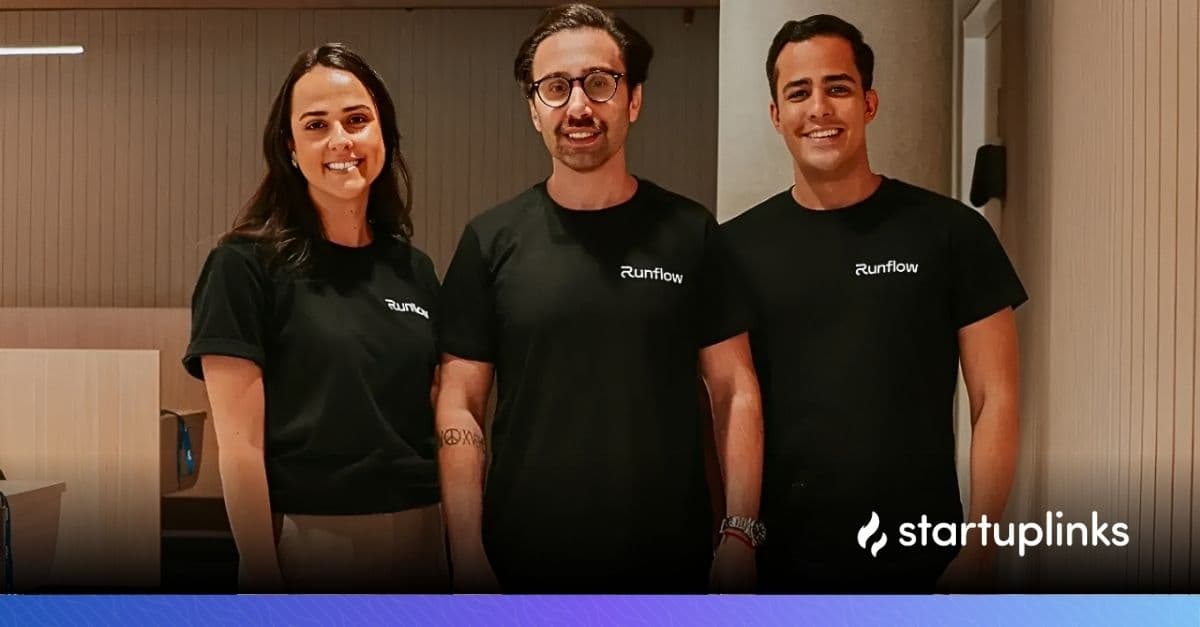
Runflow, a Brazilian startup specializing in managing artificial intelligence (AI) agents for businesses, raised R$7 million, approximately US$1,36 million, in a pre-seed round led by Honey Island by 4UM, with participation from Airborne Ventures, STAMINA Ventures and strategic investors. The capital will go toward strengthening its forward-deployed engineering team, forward-deployed, infrastructure, and growth in the enterprise segment.
Runflow builds a management layer for AI agents
Founded in 2025 as a spin-off of IFTL, an artificial intelligence education community, Runflow was created by CEO Edmee Moreira, together with co-founders Danrley Morais and Mariana Pastorelli.
Moreira and Morais previously built LinkAPI, an API integration platform acquired by Semantix in 2021 for approximately US$19,5 million.
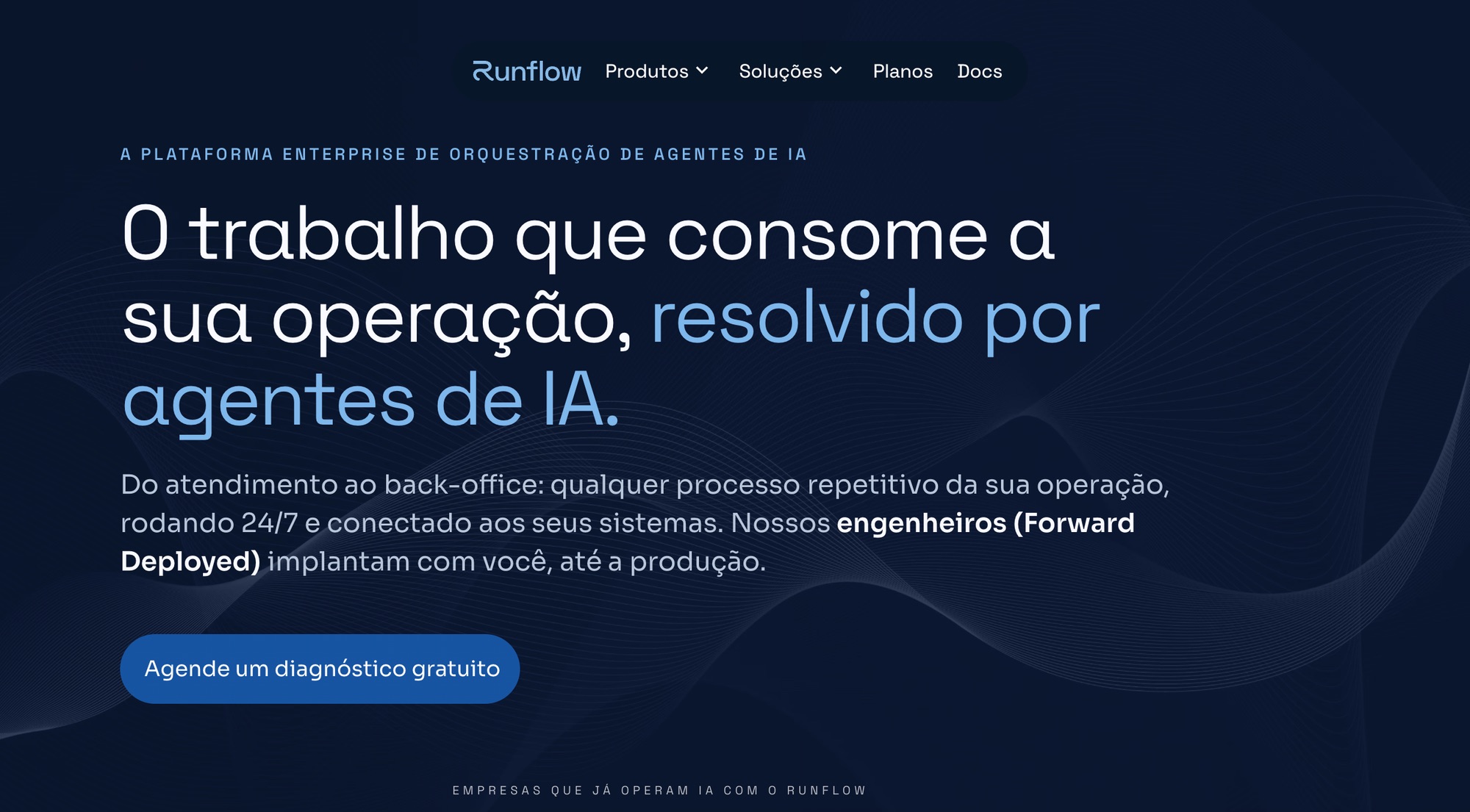
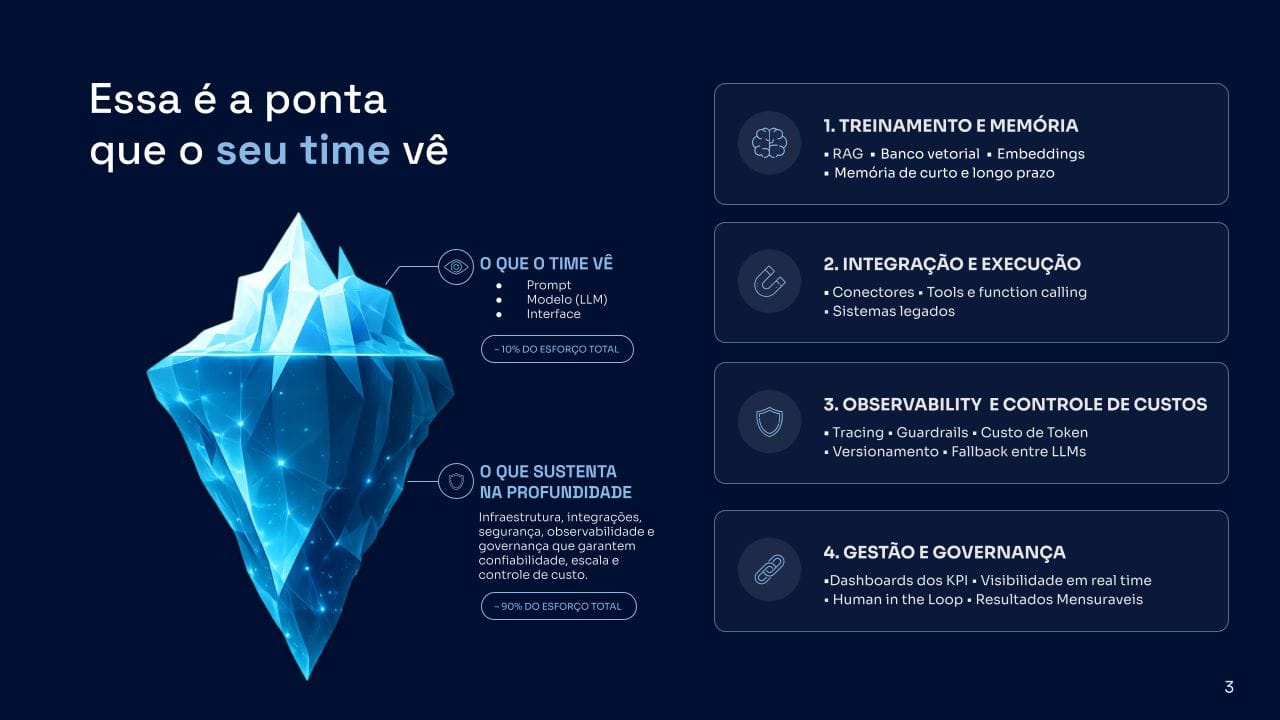
Runflow’s platform serves as a governance and operations layer for AI agents deployed within companies. Its core features include permission management, cost tracking, performance monitoring, and human oversight.
The company also has more than 150 connectors for enterprise systems, including ERPs, CRMs, APIs, and databases.
Runflow currently manages more than 500 AI agents, which perform approximately 250 million tasks per month for clients such as Vero Internet, Brasal, Grupo Osten, PX Ativos Judiciais, CTRC, and Demarest.
Honey Island leads the pre-seed round
The investment was led by Honey Island by 4UM, a venture capital firm founded by EBANX founders Wagner Ruiz, João Del Valle, and Alphonse Voigt.
Honey Island operates a US$19,5 million fund in partnership with investment manager 4UM Investimentos, with the capacity to make investments of between US$195.000 and US$975.000 in seed and pre-seed rounds.
In addition to Honey Island, Runflow’s round included participation from Airborne Ventures, STAMINA Ventures, and strategic investors.
The new capital will allow the startup to expand its forward-deployed engineering team, forward-deployed, develop infrastructure, and accelerate growth among enterprise clients.
The bet on AI agent governance
Runflow’s positioning reflects a shift in enterprise AI adoption. As companies move from pilot projects to production deployments, the challenge is becoming less about building agents and more about controlling, overseeing, and managing them once they are up and running.
Edmee Moreira has said that when artificial intelligence begins to touch a company’s core business, low-code automation tools are no longer enough.
“We’re creating a kind of HR for AI agents. Each agent needs responsibilities, the right access, goals, cost tracking, and performance monitoring,” explained Edmee Moreira, Runflow’s co-founder and CEO.
The company reports US$878.000 in annual recurring revenue (ARR) as of July 2026 and aims to reach US$2,34 million in December and US$19,5 million in 2027.
According to Runflow, its monthly recurring revenue has grown tenfold since its founding, while projects generate an average return on investment in about three months.
A growing AI market
The round comes during a record period for global investment in artificial intelligence. In the first half of 2026, venture capital reached US$510.000 million, of which AI startups raised 43%, approximately US$217.000 million.
In this environment, Runflow is betting that its local relationships and Brazil-specific integrations can serve as a defense against better-capitalized international competitors.
One of them is Israeli company Wonderful, valued at US$2.000 million, which recently entered the Brazilian market.
Runflow focuses on large enterprises, with clients that, according to the company, generate annual revenue of between US$9,75 million and US$97,5 million.
Its founders believe that the business relationships they built during the LinkAPI years, when they began developing ties with companies in 2017, represent one of the company’s main defenses against new competitors.
The results of enterprise automation
Runflow’s expansion is also backed by concrete results reported by its clients.
At PX Ativos Judiciais, automation reduced a team of 15 people to three. At Grupo Osten, a support team went from seven people to one, while lead-to-visit conversion increased by 35%.
These results place Runflow in the debate over how quickly artificial intelligence can transform administrative and customer service tasks, while also raising questions about how organizations manage the adoption and oversight of these technologies.
The challenge of competing with international players
One of the main questions for Runflow will be whether R$7 million is enough to defend its position in a market where competitors with significantly greater financial resources are entering.
Wonderful’s entry into Brazil, with a valuation of US$2.000 million, is a striking contrast with the size of Runflow’s round. While local relationships and tailored integrations may offer an advantage, enterprise buyers may also prioritize better-capitalized providers when it comes to infrastructure tied to core business processes.
Another challenge concerns its growth targets. The startup reports US$878.000 in ARR and is aiming for US$19,5 million in 2027, which would mean an increase of approximately twentyfold over a period of 18 months.
To reach that goal, the company will need to combine rapid customer acquisition with significant expansion within its existing accounts. Its business model, based on enterprise relationships built over years, may support long-term contracts, but also presents the challenge of scaling at the pace its targets require.
The challenge of balancing ROI and adoption
The PX Ativos Judiciais and Grupo Osten cases illustrate one of Runflow’s strongest arguments: its ability to automate tasks and significantly reduce the size of certain teams.
However, that same proposition adds a more complex dimension to enterprise adoption of AI agents. For CFOs, reducing team size can make a clear case for return on investment; for the employees and managers who must work with and oversee these tools every day, the process can be more complicated.
At this point, Runflow’s challenge is not limited to demonstrating the economic return of its agents; it must also build trust within the organizations that bring them into their operations.
The company’s evolution will show whether AI agent management ultimately becomes a new layer of enterprise software, and whether that market develops globally or begins to fragment according to the relationships and integrations specific to each region.