Latin America VC Report 2026 reveals greater selectivity and less late-stage growth
The Latin America VC Report 2026 finds that venture capital in Latin America grew 13.8% in 2025 to US$4.1B, with fintech leading and early-stage rounds declining sharply.

The Latin America VC Report 2026 shows a venture capital ecosystem beginning to recover invested capital, but not deal volume. In 2025, dollars deployed increased, although the number of rounds declined again, reflecting a more concentrated, selective market focused on larger checks.
Capital recovers, but activity does not
The report, prepared by Cuantico VP, finds that venture capital in Latin America closed 2025 with US$4,126 million invested across 681 rounds. This represents year-over-year growth of 13.8% compared with 2024, when US$3,627 million was recorded, marking the first significant rebound after three consecutive years of contraction since the historic peak of 2021 (US$17,381 million).
However, the number of deals fell 1.9%, from 694 to 681 deals, the lowest level since 2017.
The market, therefore, is not funding more startups, but betting on fewer companies with larger checks. The average ticket rose from US$5.2 million to US$6.1 million, an increase of nearly 16%, reflecting greater selectivity and a focus on startups with proven traction.
Brazil and Mexico account for nearly 80% of capital
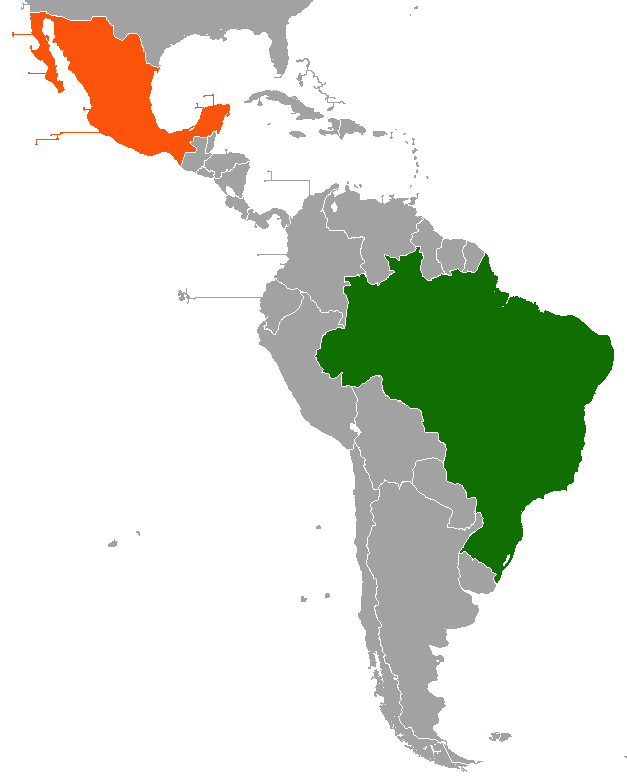
Geographic concentration deepened in 2025.
Brazil led with US$2,032 million across 363 deals, equivalent to 52.9% of the regional total, with an average ticket of US$5.6 million.
Mexico ranked second with US$980 million across 86 rounds, representing 25.5% of total capital. It also recorded the region’s highest average ticket (US$11.4 million), driven by meg arounds for fintechs such as Plata and Klar.
Together, Brazil and Mexico accounted for 78.5% of all venture capital investment in Latin America.
The rest of the rankings were as follows:
- Chile: US$249 million (53 deals)
- Colombia: US$224 million (62 deals)
- Argentina: US$172 million (34 rounds)
- Central America (regional bloc): US$107 million (41 deals)
- Uruguay: US$40 million (12 deals)
- Peru: US$35 million (8 deals)
Colombia recorded more deals than Chile (62 vs. 53), but with smaller average tickets (US$3.6 million compared with US$4.7 million). Argentina maintained competitive tickets (US$5.1 million on average), although with fewer rounds due to macroeconomic constraints.
Fintech absorbs 61% of funding
At the sector level, fintech once again dominated the ecosystem.
Although it accounted for 29% of rounds, it captured 61% of total capital invested in 2025, showing that it leads not only in activity but also in deal size.
The three largest rounds of the year were raised by Mexican fintechs:
Among the 10 largest rounds of the year were also:
- Kapital – Series C (US$100M)
- Creditas – Series G (US$108M)
- Ualá – Series E (US$66M)
- QI Tech – Series B (US$63M)
Together, the 10 largest rounds totaled US$1,229 million, equivalent to 29.8% of the total capital deployed during the year.
The second-largest sector was SaaS, with 13% in both deals and capital, including transactions such as Omie (Series D, US$160M) and Canopy (US$100M).
Logistics and energy showed high capital intensity. Logistics accounted for 5% of rounds but 17% of funding, while energy captured 10% of capital with just 4% of deals. Healthtech and foodtech each accounted for 7% of deals, though they received a smaller share of capital (3% and 4%, respectively).
The funnel narrows at early stages

One of the report’s most significant findings is the sustained contraction in pre-seed.
Capital invested at this stage fell 40%, from US$110 million to US$66 million, the lowest level since 2018. The number of deals dropped from 251 to 152, a year-over-year decline of 39.4% and a 77% decrease from the 2022 peak.
This points to a structural weakening of the pipeline: fewer startups funded at pre-seed today could mean fewer companies ready for seed and Series A in the next 18 to 24 months.
- At the seed stage, capital grew slightly, by 4.7% (from US$408M to US$427M), although the number of rounds fell from 321 to 247. The average ticket rose from US$1.27M to US$1.73M.
- Series Agrew 9.3% in capital to US$773M (72 deals), with average tickets of US$10.7M.
- Series B was the stage with the strongest relative performance: funding jumped 56.8% to US$939M across 24 deals, with average tickets of US$39.1M.
By contrast, growth rounds (Series C onward) fell 56.8%, from US$1,798M to US$777M, the lowest level since 2017.
Although the report excludes venture debt, it notes that these non-dilutive instruments have gained importance, especially among credit and BNPL fintechs, partially offsetting the decline in growth equity.
Exits surge and liquidity improves
In 2025, the value of venture capital-backed exits more than doubled, rising from US$1,800 million to US$4,900 million across 63 transactions.
The average exit ticket rose from US$29 million to US$77.8 million. This was the third-best year on record, behind only 2021 and 2018, and points to a clear improvement in liquidity conditions for LPs.
However, unicorn creation remains limited: only two Latin American startups exceeded a valuation of US$1,000 million in 2025, the same number as in 2024 and far below the 22 unicorns of 2021.
New funds and the structure of the ecosystem

In 2025, 15 new venture capital funds launched, raising a combined US$761 million, an increase of 131% over 2024.
Of a sample of 351 active funds:
- 117 focus on pre-seed
- 144 on seed
These two stages represent 74.4% of all vehicles. Only eight funds operate at the Series C stage, helping explain the scarcity of growth capital.
Typical fund sizes in the region are:
- Pre-seed: US$10M
- Seed: US$15M
- Series A: US$35M
- Series B: US$100M
- Series C: US$125M
According to Jose Kont, CEO of Cuantico VP:
“Dealflow in Latin America is far from what the industry needs. There is a shortage of startups with sufficient traction and founders capable of building truly scalable companies. However, the pendulum is beginning to swing back: 2026 and 2027 could bring more liquidity and revive investor appetite in the region.”
About the report
The Latin America VC Report 2026 is produced by Cuantico VP in partnership with Startuplinks, combining market intelligence, sector rankings, and a robust database on venture capital activity in Latin America.
The full results will be presented on 5 of March 2026 at a private event for investors, fund managers, and founders, where the LatAm VC Confidence Index and the Startuplinks Founder Confidence Index will also be launched.