Fintech Ábaco secures US$53M to expand credit for SMEs in Central America
Ábaco secured US$53 million in financing to expand its AI-powered factoring solution, marking a milestone for Central America’s fintech ecosystem.

Ábaco, a fintech headquartered in San Salvador, announced the close of a US$53 million capital structure combining venture capital (equity) and institutional debt, making it the largest funding round recorded to date for a fintech in Central America. The transaction includes a US$50 million credit line (warehouse facility) led by U.S. firm Accial Capital, alongside existing lender Pomona Impact, as well as a US$2.6 million Seed round backed by Impact Ventures PSM, Nazca Ventures, Alaya Capital, Caricaco Ventures and Innogen Capital, among other investors.
Founded in 2023 by Salvadorans Alejandro McCormack, Carlos Villalobos, and Moisés Hasbún, Ábaco uses artificial intelligence, big data, and automation to help small and medium-sized enterprises (SMEs) turn outstanding invoices into working capital in less than 24 hours. Its proprietary risk analysis engine assesses thousands of variables in real time to approve credit lines without requiring traditional collateral, replacing the manual, paper-based processes that still dominate business financing in the region.
Since its launch, the company has raised more than US$60 million in financing, originated more than US$100 million in loans, and made more than 25,000 disbursements, establishing itself as one of the fastest-growing fintechs in Central America.
Reinventing financing for SMEs
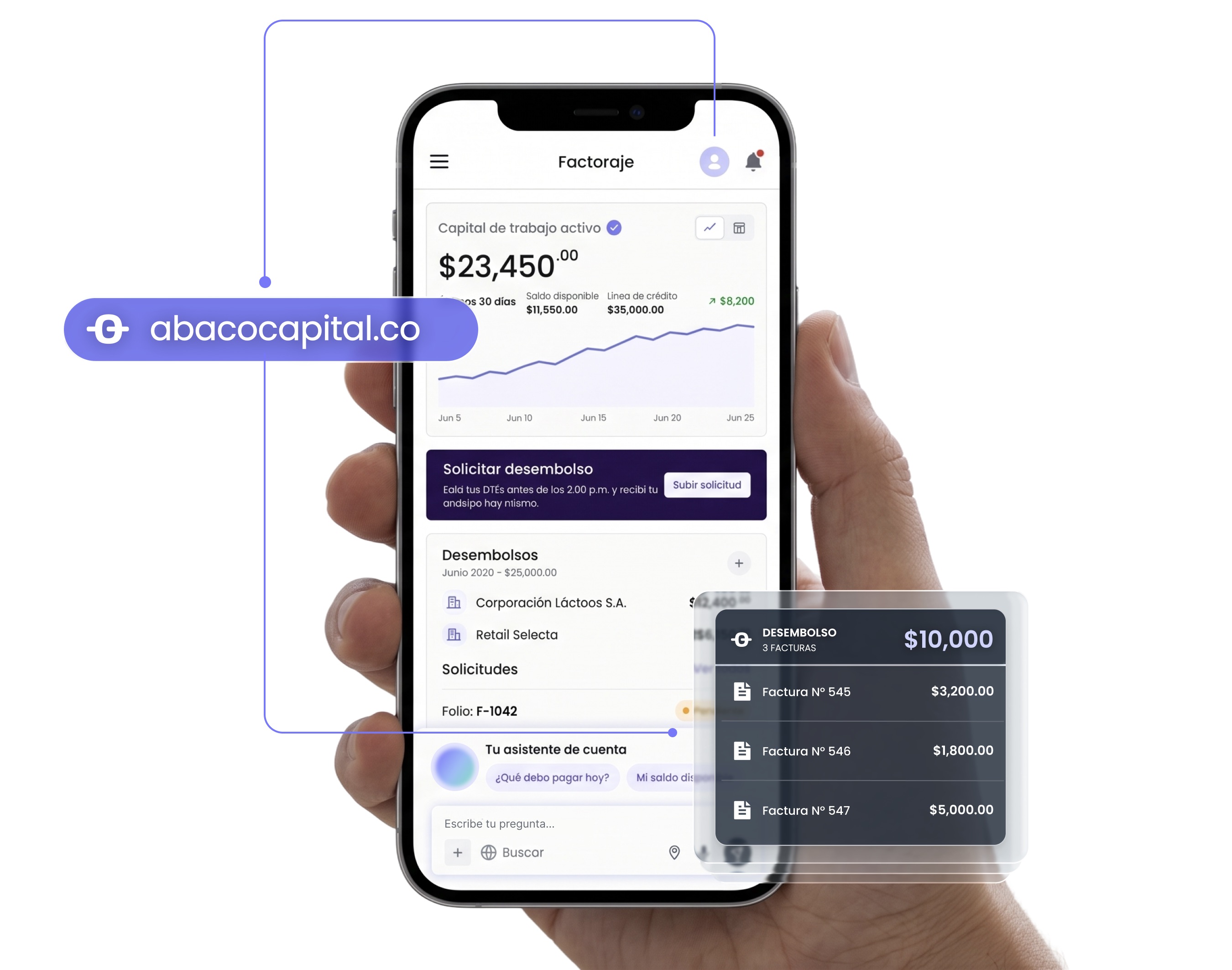
Ábaco aims to address one of the region’s main structural challenges: access to working capital for small and medium-sized enterprises. Across much of Central America, companies face payment collection cycles that can stretch to 120 days, affecting their liquidity just when they need to pay suppliers, wages, and taxes.
The platform replaces the slow processes of traditional banking with a data- and AI-driven model that enables credit lines to be approved in real time and funds to be disbursed in less than 24 hours.
According to an economic impact survey conducted by the company, the results are already visible among businesses using its platform. More than 80% of the financed SMEs accelerated their growth during the first 60 days after improving their cash flow; more than 90% expanded their customer base; 97% secured better terms from their suppliers; 69% increased their workforce; and 92% reduced their financing costs.
“Our goal is to make access to financing a competitive advantage for thousands of SMEs in Central America,” said Carlos Villalobos, Ábaco’s co-founder.
Market context
Ábaco’s round stands out in a market where deals exceeding US$50 million remain uncommon outside Brazil and Mexico, countries that have historically attracted most of the venture capital in Latin America.
According to estimates from Cuantico VP , during 2025 Brazil and Mexico accounted for 78.5% of all venture capital investment in the region. In addition, fintech accounted for 61% of invested capital, despite representing just 29% of transactions, reflecting how the largest rounds continue to focus on financial services companies.
In this context, Ábaco’s transaction strengthens the case that financing for SMEs in Central America is no longer just a structural challenge, but an investment opportunity with significant potential to scale. Specialist outlets such as TechCrunch have highlighted growing interest in fintech infrastructure that facilitates business credit in Latin America, as seen with companies such as Kala and Mono.
A financing structure designed to scale
Beyond the amount raised, the transaction marks a milestone in financial innovation.
The structure combines institutional debt with venture capital and incorporates mechanisms enabled by El Salvador’s Digital Asset Issuance Law (LEAD). According to the company, the transaction is one of the first in the world to incorporate tokenized elements into its guarantee and collateral framework, with the aim of increasing capital efficiency and making its financing model easier to scale.
The process was supported by the Ministry of Economy and INVEST El Salvador and recognized by CAF’s financial inclusion lab.
“This round represents much more than a financial milestone for Ábaco. It is a sign that it is possible to build companies in Central America that can attract world-class institutional capital to address one of the region’s biggest challenges: SMEs’ access to financing,” said Alejandro McCormack, the company’s CEO and co-founder.
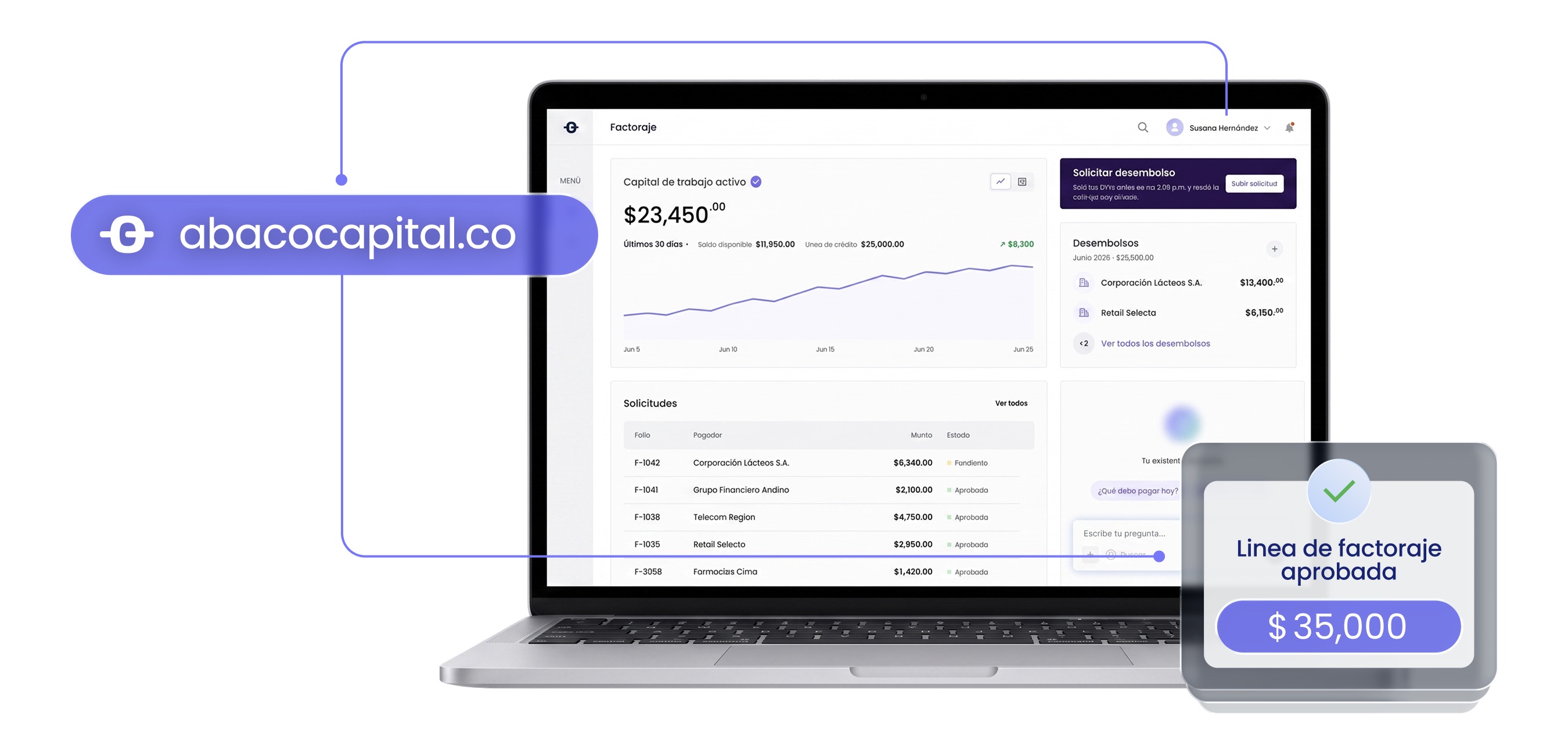
Why did Accial Capital back Ábaco?
For Accial Capital, the investment reflects the growing appeal of supply chain finance as a high-impact category with low penetration in emerging markets.
“Supply chain finance is exactly the kind of underserved, high-impact segment we seek to support,” explained Jared Miller, CEO of Accial Capital.
The executive noted that Ábaco combines deep knowledge of the local market with a proprietary technology platform for assessing credit risk, while also incorporating one of the first guarantee structures based on tokenized assets that the firm has backed. He said this offers a vision of how private credit infrastructure will evolve in emerging markets.
Since 2018, Accial Capital has backed more than US$4,500 million in loans worldwide, including US$3,400 million for micro, small, and medium-sized enterprises, benefiting more than one million borrowers, over half of them women.
Regional relevance
For the United States, the transaction shows how U.S. private credit capital can extend into an emerging credit niche in Latin America—in this case, factoring for small businesses, a segment that has been slow to attract institutional financing outside Brazil and Mexico. It also reflects a broader trend toward cross-border impact investment strategies, with funds seeking market-rate returns in underserved credit markets.
For Latin America, the round validates El Salvador’s bid to position itself as a hub for fintech and digital asset innovation through LEAD, while addressing a persistent problem in the region: SMEs’ insufficient access to formal financing. If Ábaco successfully expands into Guatemala and Costa Rica, it could become a leading example of cross-border digital factoring in the isthmus.
Next steps
With the new funding, Ábaco expects to originate more than US$350 million in financing in the short term and expand its reach to serve more than 10,000 small and medium-sized enterprises.
The company also plans to consolidate its operations in El Salvador and accelerate its expansion into Guatemala, Costa Rica, and the Dominican Republic, with the goal of becoming one of the leading digital factoring and financing platforms for SMEs in Central America and the Caribbean.