Félix closes $ US$200 million Series C led by Andreessen Horowitz
Félix raises $ US$200 million in a Series C led by Andreessen Horowitz to expand across Latin America and offer new financial services.
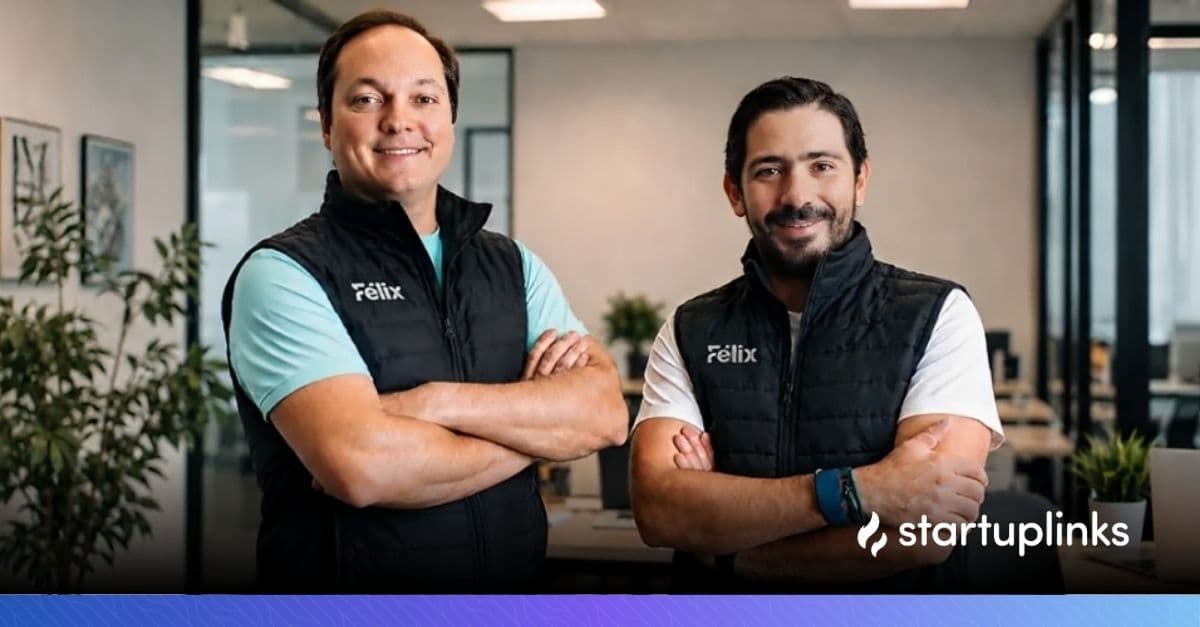
Félix, the Miami-based fintech that lets Latin American workers in the United States send money to their home countries through a WhatsApp conversation, raised $ US$200 million in a Series C round. The funding will allow the company to expand its regional presence and develop new financial services beyond remittances.
A round split between equity and credit
The round, confirmed by the company on September 1, 2026, consists of approximately $ US$87 million in equity, led by Andreessen Horowitz, and nearly $ US$113 million in credit provided by General Catalyst’s Customer Value Fund.
Also participating were QED Investors, Castle Island Ventures, Switch Ventures, Contour Venture Partners and Endeavor Catalyst.
Félix did not disclose its post-money valuation, although it said the figure tripled compared with its Series B valuation, following a $ US$75 million round led by QED Investors in 2025.
The fintech’s funding pace has accelerated in recent years. In May 2024, it raised $ US$15,5 million in a Series A led by Castle Island Ventures; later, in April 2025, it secured $ US$75 million in a round led by QED Investors.
Six years ago, Félix started with a simple idea: sending money home should feel as easy as sending a message.
— Félix (@Felixpago) September 1, 2026
Today, we're raising $200M in funding, led by @a16z and participation of @QEDInvestors, @CastleIslandVC, Switch Ventures, Contour Venture Partners and @endvr_catalyst… pic.twitter.com/ACCWkhhyJd
From remittances to a financial services platform
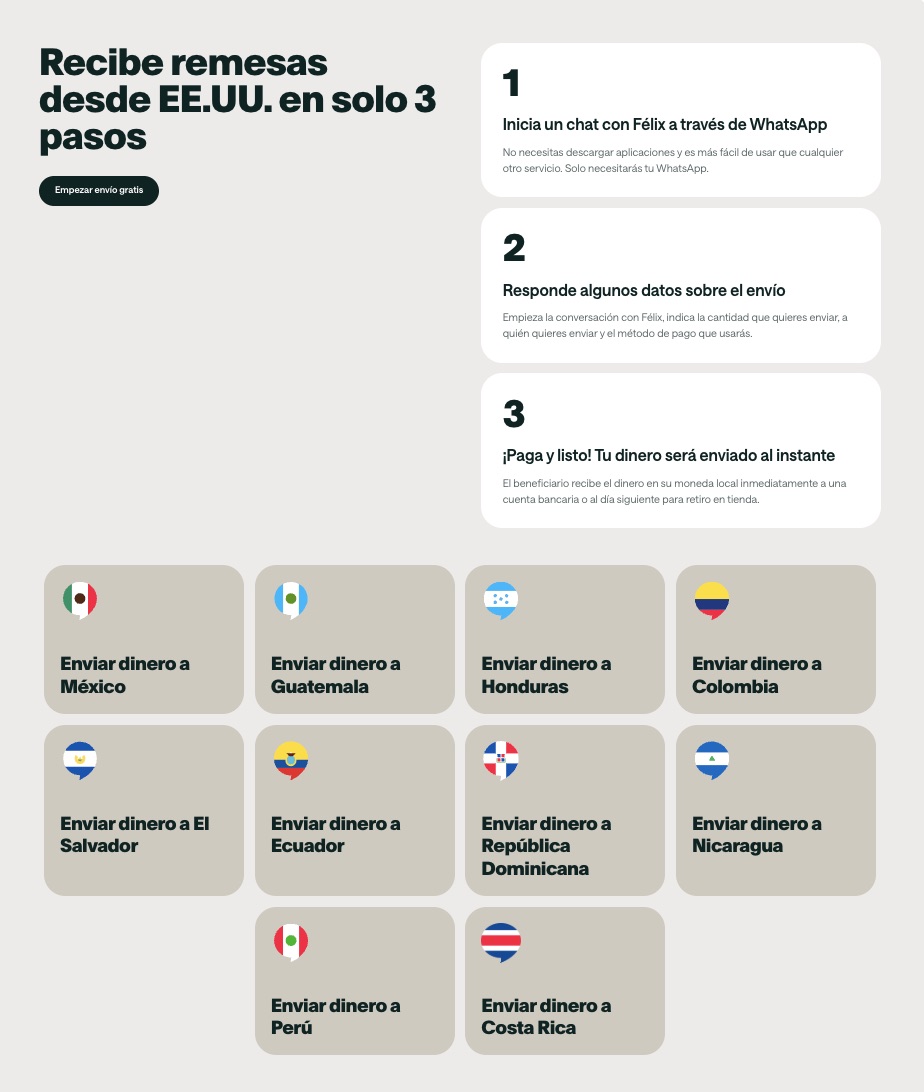
Founded in 2020 by Manuel Godoy, CEO, and Bernardo García, both Wharton graduates, Félix currently operates in 11 Latin American markets, including Mexico, Colombia, Ecuador, El Salvador, Brazil, Costa Rica, Honduras and Peru.
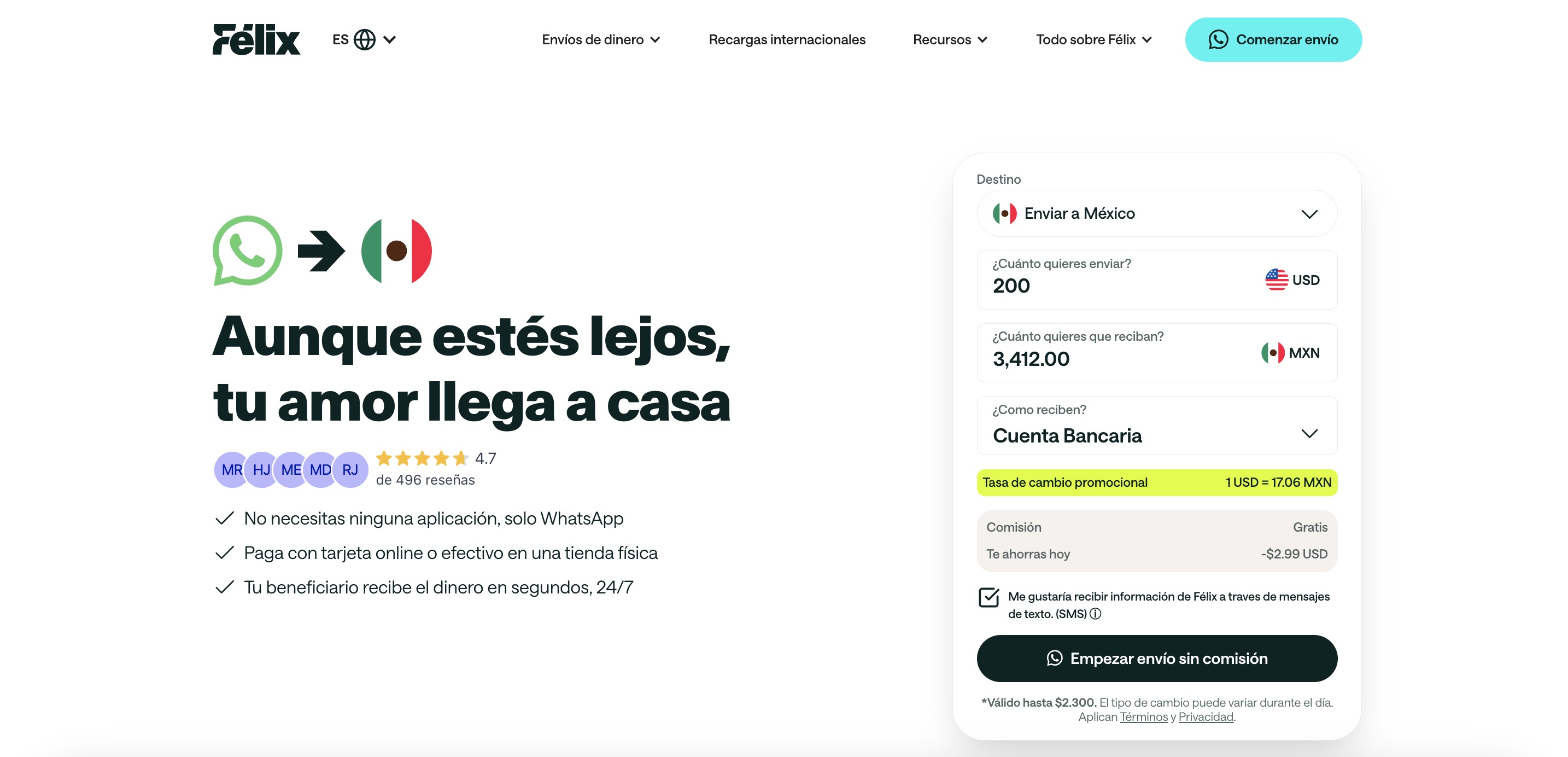
Its service lets users send text messages or voice notes to a chatbot within WhatsApp to make transfers. Beneficiaries receive the funds through bank deposits in local currency or cash at partner locations.
Behind the scenes, transfers are settled using USDC, Circle’s stablecoin, without users having to interact directly with cryptocurrency.
To date, Félix has processed more than $ US$8.000 million in transactions, serves more than 6 million people and reported revenue growth of 2,5 times over the past year.
With the new capital, the company plans to enter Brazil and Venezuela, as well as expand its offerings to include credit and savings products.
The fintech is also working on an artificial intelligence assistant that Félix calls a “cognitive financial companion.”
The remittance market faces new challenges
The new round comes at a particular moment for the remittance business. Latin America receives more than $ US$160.000 million annually from workers abroad.
Mexico, the region’s largest individual corridor, received approximately $ US$61.700 million in 2025, a decline of nearly 4,7% and the first annual drop in 11 years.
Adding to this is a new U.S. federal tax of 1% on remittances funded with cash, money orders and cashier’s checks, in effect since January 1, 2026. The Joint Committee on Taxation projects that the measure will raise around $ US$10.000 million through 2034.
Transfers funded from bank accounts or with cards are exempt, a scenario that favors the profile of digital services users.
Félix competes in a stablecoin-powered market

Transfer efficiency has also become a competitive factor in the market.
Bitso, the region’s largest cryptocurrency exchange, moved $ US$6.500 million in remittances between the United States and Mexico during 2024, more than 10% of that corridor’s total, with a significant share of transactions using stablecoin-based infrastructure.
Félix aims to leverage similar efficiency without requiring its users to interact with cryptocurrency, while competing with companies such as Remitly and Wise, as well as traditional operators such as Western Union and MoneyGram.
A bet on financial services for an underserved community
Félix’s next step is to use the relationship built through remittances to offer other financial products.
Manuel Godoy, Félix’s co-founder and CEO, summed up the company’s vision as follows:
“We want to build a Goldman Sachs-style experience for a user who has historically been completely underserved.”
The strategy aims to turn the channel used to send money into a gateway to services such as credit and savings.
Félix’s significance for the United States and Latin America
For the United States, Félix’s expansion represents a bet on a customer base that has traditionally faced barriers to accessing financial services. Nearly 6 million people already use Félix to move money, and the company aims to offer them credit and savings products within the same conversational channel.
In Latin America, the new strategy comes as household income from abroad faces changes. The decline in Mexican remittances and the new U.S. tax on transfers funded with cash increase the importance of the cost of each transaction.
According to BBVA Research, 84% of Mexican migrants in the United States have bank accounts, compared with 65% in Honduras, 72% in Guatemala and 74% in El Salvador, leaving Central American corridors where Félix aims to continue expanding more exposed to the tax.
Miami also plays an important role in this strategy. The city has established itself as a hub for fintechs operating between the United States and Latin America, and Félix strengthens this connection by developing a financial platform focused on both markets from U.S. soil.