Duppla raises US$60 million to expand access to housing in Colombia
Duppla raises US$60 million in debt and equity to expand its rent-to-own housing model and grow in Colombia.

Duppla, a Bogotá-based startup that helps Colombians access housing through a rent-to-own model, closed a financing round of approximately US$60 million, combining debt and equity. The deal was led by a fund managed by Patria Investments, marking the firm’s first venture capital investment in Colombia.
Patria Investments leads Duppla’s round
The round also included participation from Skandia Planeación Financiera, Cometa, Grupo Pegasus and Nazca, as well as other local and international investors.
Duppla’s co-founders, Cristian Villamizar and Felipe Fierro, who founded the company in 2022, said the new capital will allow the startup to expand its housing financing capacity and strengthen its investment platform focused on residential income.
For Patria Investments, the deal marks its first venture capital investment in Colombia. Diego Chona, a partner at the firm who leads private equity in Latin America, excluding Brazil, highlighted the scalability of Duppla’s model and its potential to meet underserved demand for housing finance.
“We saw a model here that could go a long way toward closing the gap for Colombians who cannot access a mortgage,” said Diego Chona, Partner and Head of Private Equity LatAm ex-Brazil at Patria Investments.
Chona also explained that the deal reflects collaboration between Patria’s real estate, private equity, and venture capital teams.

How does Duppla’s housing model work?
Duppla’s model aims to offer an alternative for people who cannot initially qualify for a traditional mortgage.
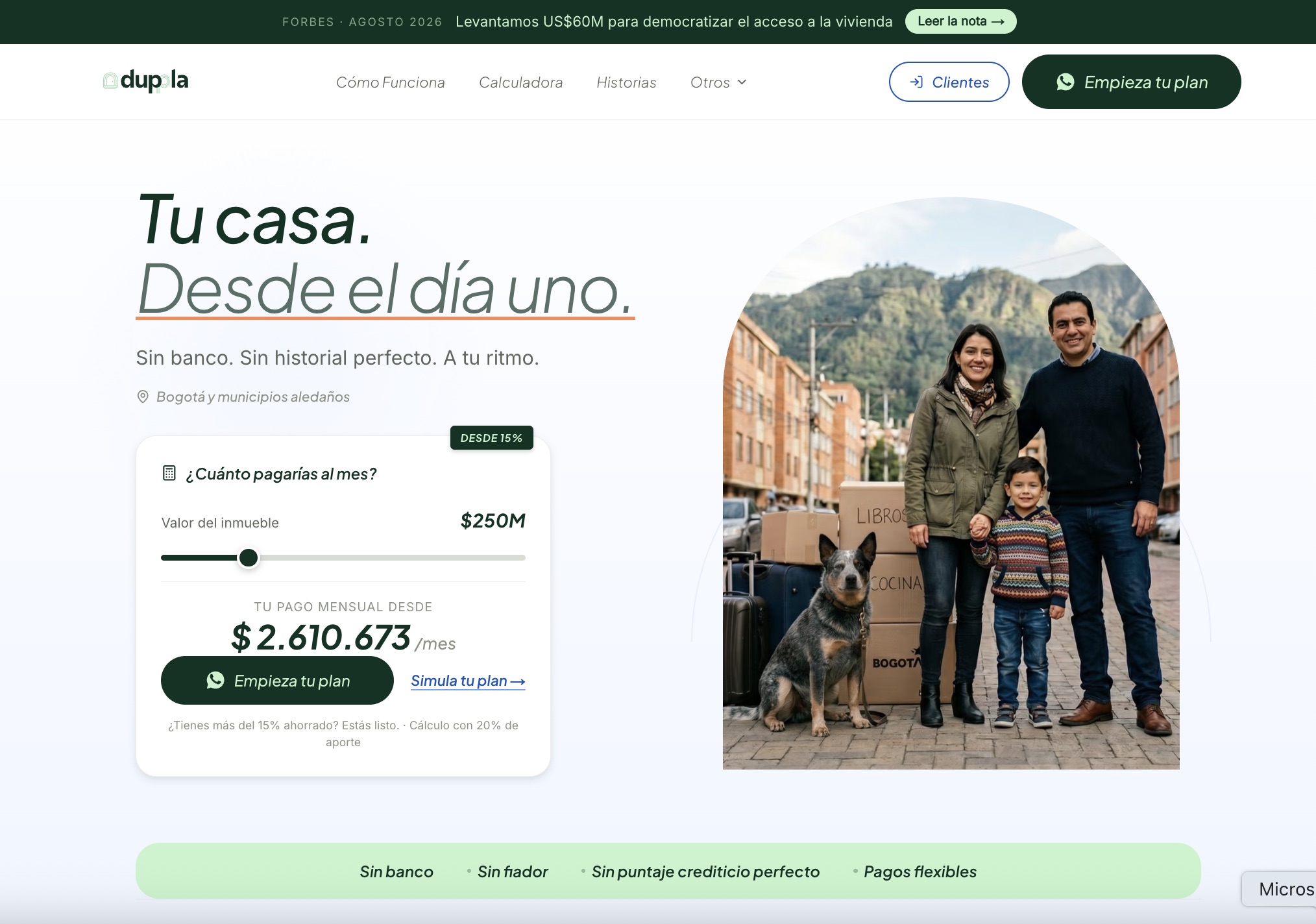
The company buys the home selected by the customer and then rents it to them, while signing a purchase agreement that can be exercised within a period of up to five years.
To get started, customers must contribute at least 15% of the property’s value. They then rent the home for an initial five-year period while Duppla finances the remaining amount.
During this process, customers can build the credit history needed to eventually qualify for a traditional mortgage.
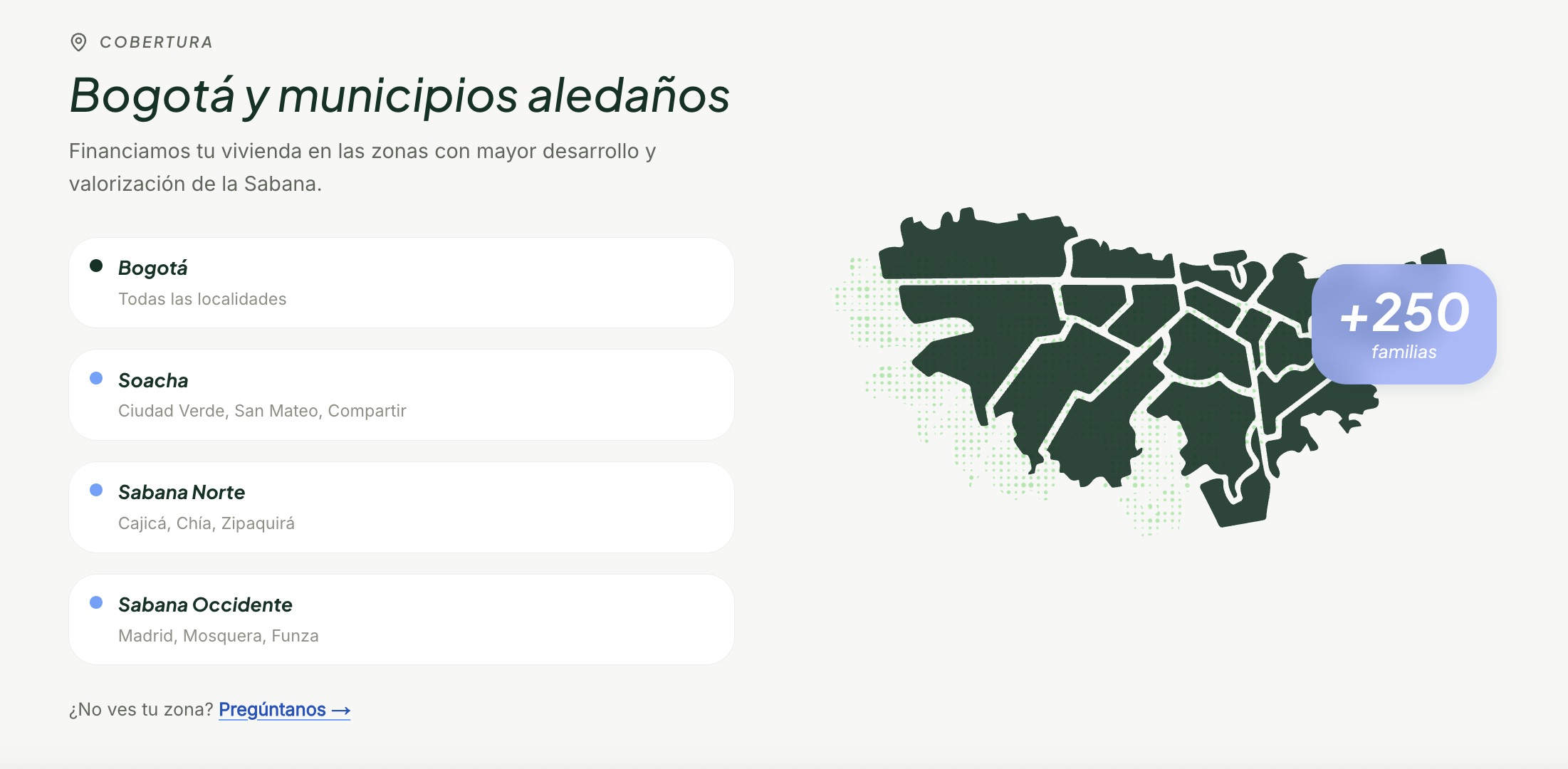
The startup currently serves approximately 300 families in Bogotá and nearby municipalities. Its next expansion market will be Medellín.
The mortgage gap Duppla aims to address
Duppla’s model operates in a market where access to mortgage credit remains limited.
In 2024, only around 3% of Colombian adults had a mortgage, reflecting the challenges millions of people with variable or informal incomes, insufficient credit histories, or negative records face in accessing traditional financing.
Financing costs add to the challenge. Mortgage interest rates in Colombia averaged 16,1% in 2023, making them some of the highest in the region.
This context highlights the structural gap that rent-to-own models like Duppla’s aim to address by offering an alternative to people who cannot immediately qualify for a mortgage.
Patria expands its bet on Colombia
Although the investment in Duppla is relatively small compared with the scale of Patria Investments, it also represents a strategic move for the Brazilian firm.
Patria entered the venture capital business after acquiring Igah Ventures in 2022 and has since pursued an acquisition strategy in Latin America, the United States, and Europe, with the goal of becoming one of the world’s 30 largest asset managers.
The firm currently manages more than US$59.000 million in assets.
In Colombia, Patria has more than US$7.000 million invested or under management and expects to double its venture capital exposure in the country to US$1.400 million over the next three to five years.
The strategy includes sectors such as healthcare, infrastructure, agriculture, and logistics, as well as opportunities the firm is exploring in data centers, food, and cybersecurity.
Patria’s expansion in Colombia also includes a binding agreement signed in November 2025 to acquire UnitedHealth Group’s Banmédica operations in Chile and Colombia, a deal still pending regulatory approval.
Colombia’s market faces a new investment landscape
Duppla’s deal comes amid high financing costs and uncertainty over Colombia’s regulatory and fiscal outlook.
Foreign direct investment in the country fell to US$11.500 million last year, down from more than US$17.000 million in 2022.
The deal also follows the election of Abelardo de la Espriella, who will assume the presidency in August after campaigning on a promise to revive economic growth and private investment. His victory in June as a conservative lawyer raised expectations of an investment recovery in the country.
Against this backdrop, Patria’s bet on Duppla focuses on one of Colombia’s most economically and socially significant sectors: access to housing and mortgage financing.
Can Duppla scale its model nationwide?
One of the main challenges will be determining whether the US$60 million in debt and equity will allow Duppla to make a significant impact on the country’s housing access gap.
The company currently serves around 300 families and aims to reach 1.500 by the end of 2027. While that would represent significant growth, it would still be a small proportion of the millions of Colombians who remain outside the traditional mortgage system.
To sustain this expansion, Duppla will need to continue raising both capital and new lines of debt as its financing portfolio grows.
The risk behind the rent-to-own model
The rent-to-own model also raises questions about how risk is distributed.
Because Duppla retains ownership of the home during the rental period, families who fall behind on payments or fail to qualify for a mortgage at the end of the term could lose both the home and the contributions they have already made.
This tension is not unique to Duppla; it is part of the structural risks associated with housing models rent-to-own around the world.
For the startup, the challenge will be to show that this mechanism can become a sustainable path for more Colombian families to move from renting to homeownership, as it scales from Bogotá into other markets such as Medellín.