Autonomy raises US$8 in Series A to advance its mobility and financing model
Autonomy raises US$8 in Series A to expand its fleet of vehicles for app-based drivers and reach 10.000 units in 2027.

Argentine mobility and financial services startup Autonomy closed a US$8 million Series A round to expand its vehicle fleet under a “rent-to-own” model aimed at drivers on ride-hailing platforms who have difficulty accessing traditional auto financing.
The round was backed by Magna Capital, Comafi, Natan VC and Murchison Ventures, the latter as a returning investor. The company was founded in 2022 by José Trusso, a former Deutsche Bank and JP Morgan banker, alongside his co-founder Leandro Cuccioli.
With the new capital, Autonomy aims to grow its current fleet approximately sevenfold and reach 10.000 vehicles in the Southern Cone by December 2027.
A financing model for platform drivers
Autonomy offers new vehicles through a lease-to-own arrangement for drivers working with platforms such as Uber, DiDi, and Cabify.
The service bundles items such as insurance, maintenance, and permits into a single monthly payment. To evaluate applicants, the company considers their income history generated through mobility platforms rather than relying solely on traditional credit scores.
Drivers can choose to purchase the vehicle at the end of a 36- or 48-month period.
The startup currently has a fleet of more than 1.500 vehicles, compared with the 10 cars and five employees it started with when it began operating this model in 2023.

Demand outstrips current capacity
The growth of app-based transportation in Argentina has generated demand for drivers that has not been matched by an equivalent increase in supply.
According to Autonomy, demand for rides in this segment grows by approximately 30% annually, while many drivers struggle to obtain vehicle loans because they lack fixed payroll income, guarantors, or enough savings to cover a down payment.
This gap has created room for alternative financing models such as Autonomy’s.
The company receives approximately 3.000 inquiries each month from prospective drivers, but can currently serve only half of them.
The model also reflects a trend seen in other emerging markets, including Brazil and Mexico, where companies combining fintech and mobility use data generated by work platforms to assess the ability to repay of workers with limited access to the traditional financial system.
A capital-backed growth strategy
Since its founding in 2022, Autonomy has raised capital in several stages. In 2025, it received a US$1,5 million tranche from investors such as Gabriel Martino, former CEO of HSBC Argentina.
Before this Series A, the company had raised approximately US$10 million in financing, including both equity and debt.
Autonomy is also part of Endeavor Argentina’s ScaleUp program, which supports high-growth startups through mentorship and access to investors.
For José Trusso, the new round represents more than an injection of capital.
“This round is much more than capital: it’s a vote of confidence in the team, the model we’ve built, and our long-term vision.”
A regional expansion
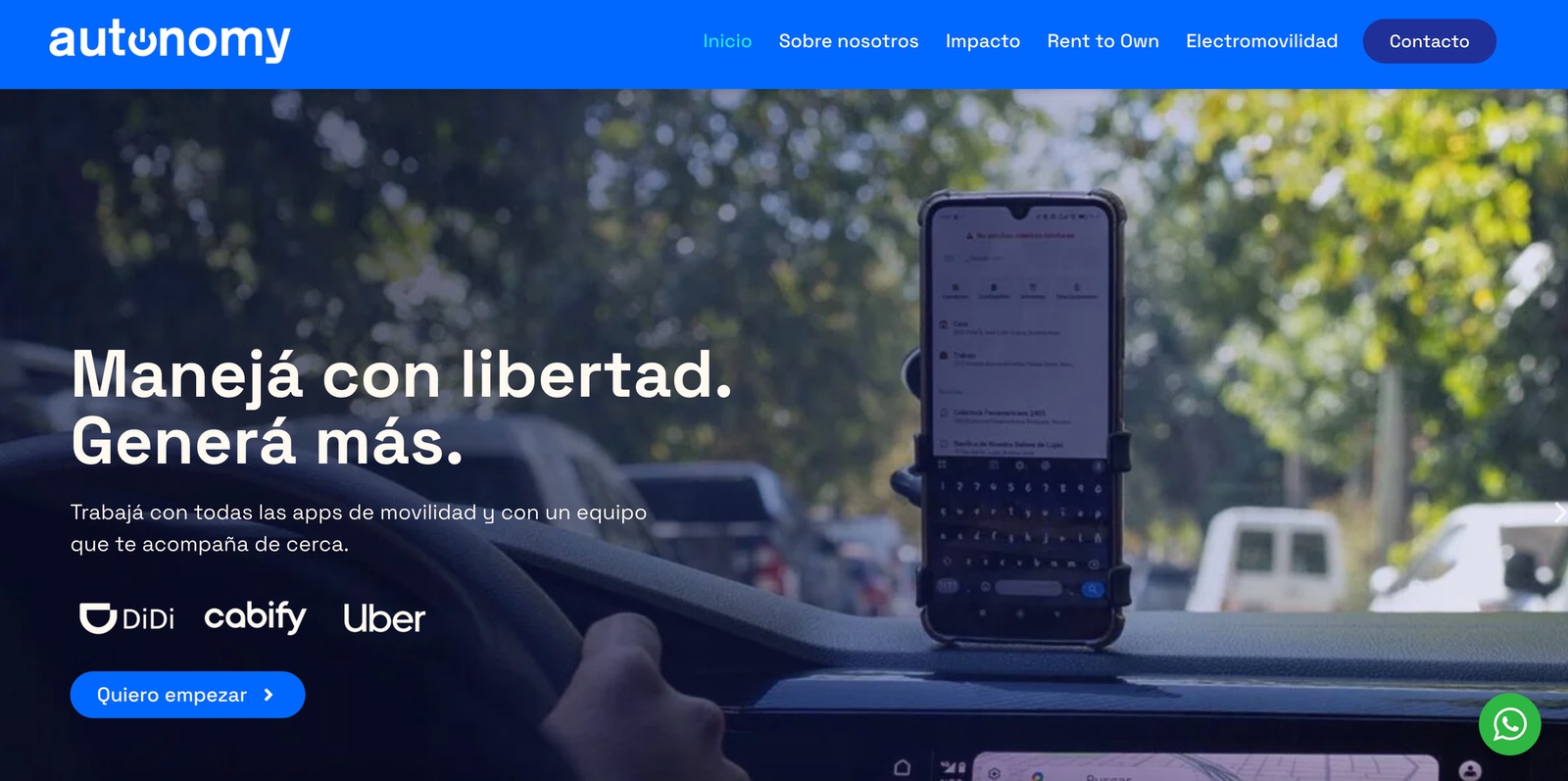
Autonomy’s plan is to grow its fleet from more than 1.500 vehicles today to 10.000 units by December 2027, with a presence in the Southern Cone.
The company is also looking at electric and CNG vehicles, in line with regional interest in reducing emissions from urban transportation.
In addition, its planned expansion into Chile and Uruguay aims to help build a productive physical-asset operator with a presence across the Southern Cone.
The challenge of financing growth
The goal of growing the fleet nearly sevenfold also entails significant capital requirements. Scaling from 1.500 to 10.000 vehicles means financing the purchase of units, as well as expenses related to maintenance and insurance.
As a result, reaching this target could require additional financing through debt or future equity rounds.
There is also risk associated with the credit assessment model. While using platform-generated income makes it possible to consider workers who might otherwise be excluded from traditional mechanisms, a driver’s income can change significantly over periods of 36 to 48 months, while the value of the Argentine peso can also fluctuate.
Default rates will be one factor to watch as Autonomy expands its fleet.
Finally, the gap between approximately 3.000 monthly inquiries and the company’s current capacity to serve only half of those interested points to strong demand, but also raises the challenge of maintaining risk assessment standards as the company accelerates growth and competes for capital and drivers.