Argentine startup Alkemio accelerates expansion after closing $ US$2 million funding round
Alkemio closed a $ US$2 million funding round to expand its technology and advance global commercial agreements.
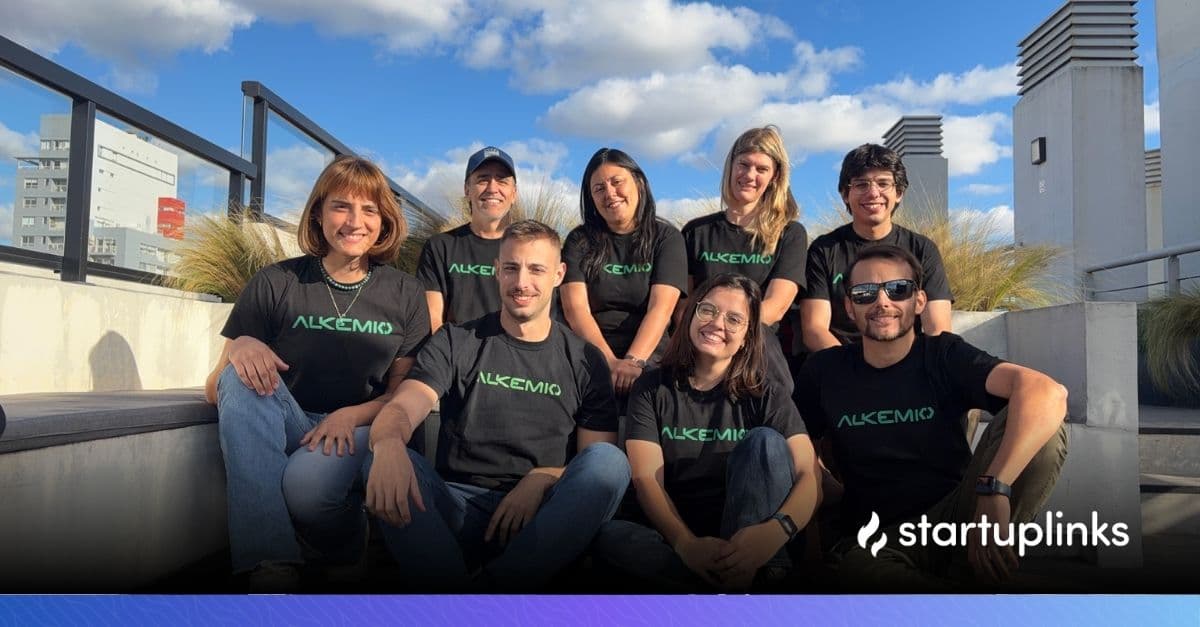
Alkemio, the Argentine startup specializing in efficient, sustainable technologies for recovering and separating rare earths, announced the close of a $ US$2 million funding round. The company will use the capital to expand its technology platform, validate its processes at commercial scale, and accelerate strategic agreements in a global market increasingly strained by demand for critical minerals.
The company, headquartered in the Almagro neighborhood of Buenos Aires, was founded in July 2023 by scientists Federico Pereyra Bonnet, Lorena Molina Calderon and Ailín Svagzdys, who recently brought Ángel Centeno on board as a partner and new CEO.
Investors from the Americas and Asia back Alkemio
The round brought together investors from various international markets. Participants included VU Venture Partners, from the United States; Dalus Capital and Amplifica Capital, from Mexico; VX Ventures; as well as the Argentine funds GRIDX and Dragones Venture Partners.
Angel investors such as Epic Angels and AngelHub.
Before this deal, the startup had already secured US$400.000 from GRIDX and SkyDeck, the University of California, Berkeley's accelerator.
Growing global demand for rare earths
Rare earths have become strategic minerals for multiple technology industries. Currently, around 95% of their consumption goes toward manufacturing permanent magnets, which are essential for electric vehicles, wind turbines, industrial motors, artificial intelligence data centers, medical applications, aerospace technology, and defense systems.
Demand for these minerals has doubled since 2015, and projections point to an additional one-third increase by 2030.
Among the most important materials are magnets made from neodymium and praseodymium, combined with dysprosium and terbium, which are considered some of the most powerful on the market.
China dominates the global supply chain
One factor driving global interest in new refining technologies is the world's heavy reliance on China.
According to the report Rare Earth Elements—Pathways to Secure and Diversified Supply Chains by the International Energy Agency, China accounts for 60% of global production of rare earths for magnets and 91% of global refined production.
The country also leads in the manufacture of permanent magnets, a position that became especially sensitive after export controls were introduced by Xi Jinping's government in response to the tariff war launched by the United States.
The restrictions caused supply chain tensions and affected automakers in both the United States and Europe.
As a result, various countries began accelerating projects to develop supply chains outside China. Australia, the United States, and Brazil are among the markets with the greatest potential for mining expansion by 2035.
Alkemio's sustainable technology
In this context, Alkemio is betting on technology designed to produce high-purity dysprosium oxides and, in the future, neodymium, praseodymium, and terbium oxides as well.
The startup combines leaching processes using organic acids with selective separation through functionalized ligands, operating in aqueous conditions and avoiding the use of organic solvents.
Unlike traditional solvent-extraction methods—considered highly polluting and costly—the company's technology aims to reduce capital expenditure by nearly 80% and operating costs and waste generated by around 20%.
“By contrast, our technology reduces capital expenditure by nearly 80% and operating expenses by around 20%, while also reducing waste generation,” explained Ailín Svagzdys, who leads the company's research and development efforts.
The goal of the new investment
The startup will use the proceeds to expand its portfolio of selective ligands and increase the range of elements it can recover.
According to Svagzdys, the goal is to validate the technology, optimize the system's performance, and advance new commercial agreements with strategic customers.
Alkemio currently works with 15 global partners, including mining companies, recycling firms, and industrial operators interested in recovering and refining critical minerals. The startup already has six signed letters of intent and multiple proof-of-concept projects in development.
Alkemio's international expansion plan
The founders plan to deploy an initial commercial module within the next two years. Its business model will combine technology licensing and module sales with recurring revenue from royalties and consumables.
In the medium term, the company is also considering operating its own facilities focused on recycling and making use of secondary sources of critical minerals.
For Rogelio de los Santos, cofounder and managing partner at Dalus Capital, the investment in Alkemio responds to the need to build a “more sovereign and cleaner” supply chain.
“Alkemio offers a disruptive solution: modular, sustainable, low-cost technology that makes it possible to refine directly at the mine, achieving purity and recovery levels that are competitive with the world's most advanced processes,” he said.
A pilot in the United States and a global vision
Maaike Doyer, founder of Epic Angels, said the startup's immediate priority will be to demonstrate the commercial viability of its technology through a pilot project in the United States.
“Once that validation is complete, the path to global implementation will be very clear,” she said.
The investor added that the company's technology eliminates toxic solvents, reduces emissions, and makes it possible to process rare earths directly at deposits.
For his part, Martín Teubal, founding partner at Dragones Venture Partners, said the startup is at a decisive moment for accelerating its growth.
“Having closed the round, we would have enough runway to do both things at the same time. Alkemio is not just a materials startup. It should be considered critical infrastructure for the technological sovereignty of the West,” he concluded.