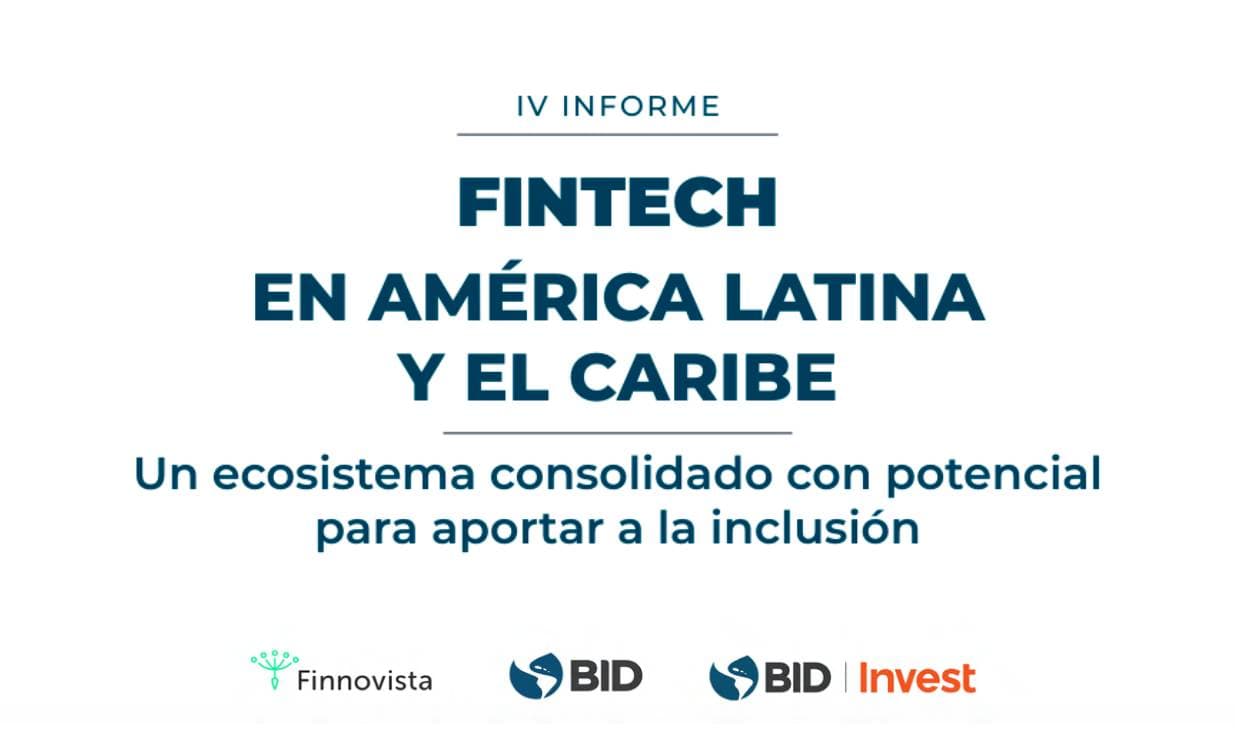
Fintech Report for Latin America and the Caribbean 2024
Discover and download the fintech report for Latin America and the Caribbean 2024, created by Finnovista and the Inter-American Development Bank.
Finnovistafinnovista
Download the full report here.
Finnovista, an innovation and venture capital company committed to the fintech ecosystem and the transformation of finance in Latin America, in collaboration with the Inter-American Development Bank, whose mission is to improve lives; created and presents the report “IV Fintech Report in Latin America and the Caribbean.”
As Finnovista partners, we at Startuplinks are happy to share the latest data from the fourth report on the fintech ecosystem in Latin America and the Caribbean, produced in collaboration with the Inter-American Development Bank, which shows impressive growth of 340% in the sector.
Overview of the fintech ecosystem in LATAM
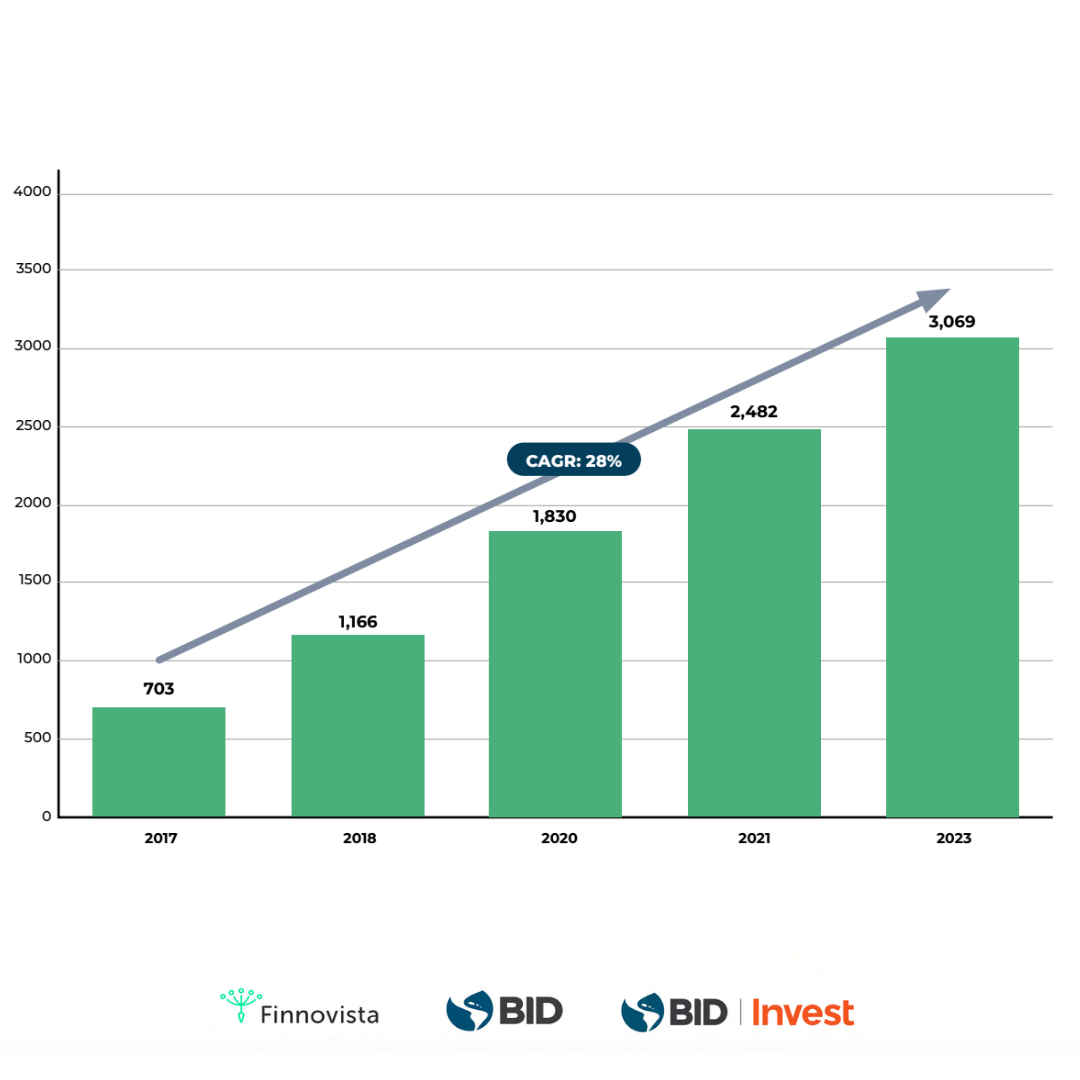
The fintech ecosystem saw growth of more than 340% in the number of technology finance ventures launched over the past six years, increasing from 703 companies in 18 countries in 2017 to 3.069 in 26 countries in 2023, according to the fourth report in the Fintech in Latin America and the Caribbean series.
Fintech subsectors in Latin America and the Caribbean
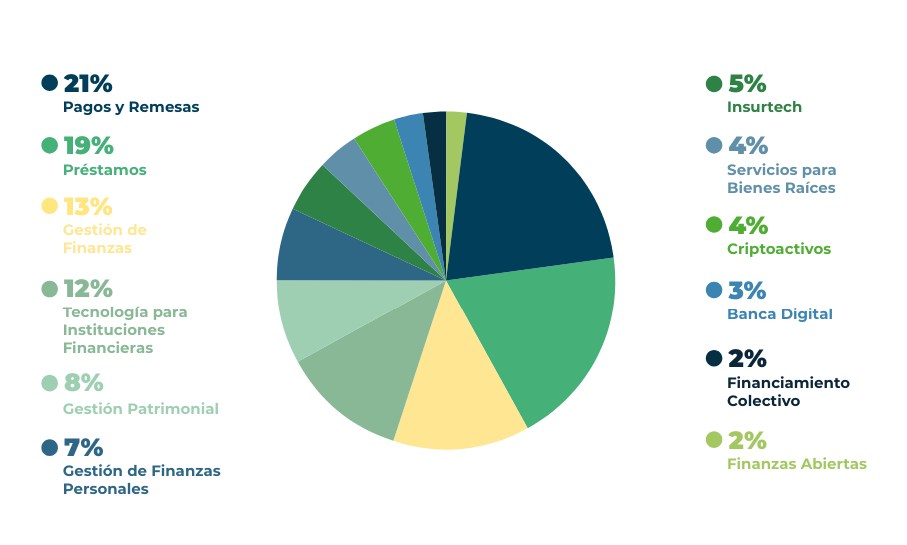
The segments with the most platforms in the region continue to be payments and remittances, with 21% of all companies; lending, with 19%; and business financial management, with 13%.
Fintech startup locations by country
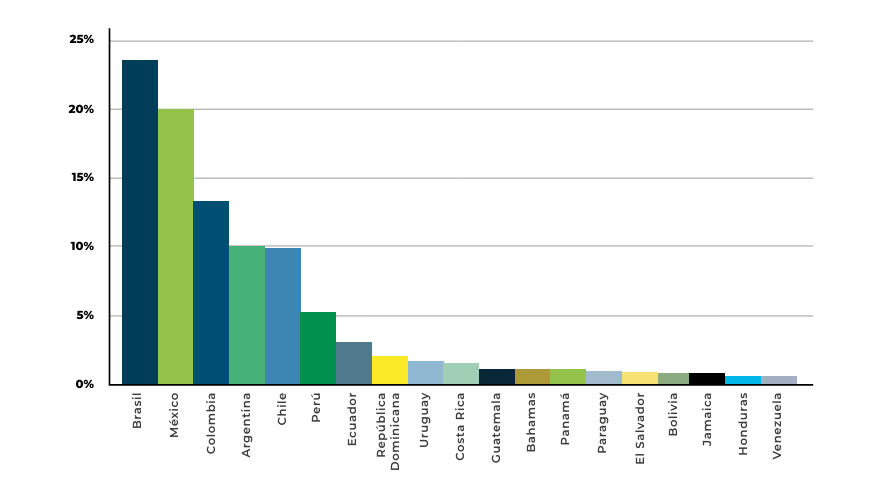
- Brazil remains the country in the region with the largest number of fintech ventures, accounting for 24% of the total. It is followed by Mexico with 20%, Colombia with 13%, and Argentina and Chile with 10% each.
- Peru, Ecuador, the Dominican Republic, Uruguay, Costa Rica, and Guatemala make up a group of emerging markets developing at a remarkable pace, with average annual growth of 44% between 2017 and 2023.
Fintech startup business models in Latin America
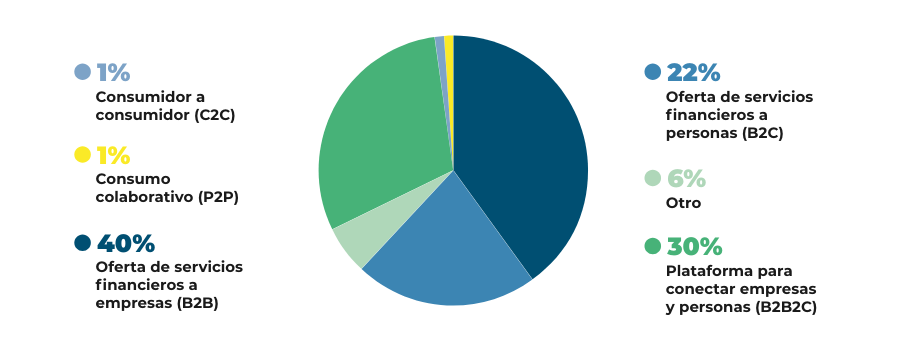
- 40% of fintech startups in Latin America have a B2B business model
- 22% of startups are B2C
Fintech startup stages
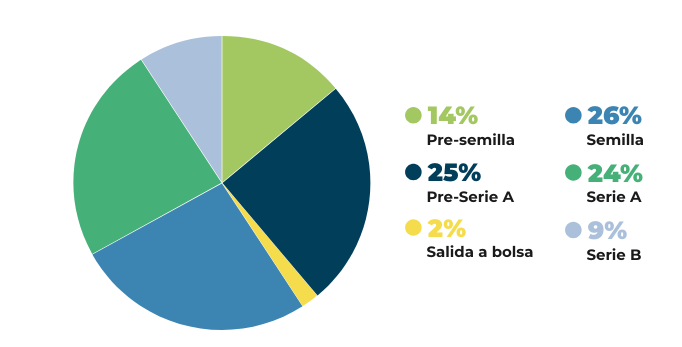
- Although 65% of startups are below Series A, fintech is the most developed industry.
- Approximately 50% of Latin American unicorns are unicorns.
Conclusions
Maturation and consolidation of the fintech ecosystem: The fintech ecosystem in Latin America and the Caribbean has matured significantly, as evidenced by a slowdown in its growth rate. Although the sector grew by more than 340% between 2017 and 2023, its annual growth rate has declined, signaling a consolidation phase. This development has been driven by strong consumer demand, digital infrastructure, and a favorable regulatory environment.
Investor preference and financing diversification: The fintech sector has become investors’ preferred area within the technology industry, attracting 46% of capital in 2023. Investors are showing growing interest in expanding their existing investments, favoring more institutional and corporate sources of financing. However, access to funding remains a major challenge, although optimism about interest in innovative, high-risk models remains strong.
Regulatory progress and public-private collaboration: Countries in the region have made progress in creating enabling regulatory frameworks, adopting fintech laws and innovative regulations. Initiatives such as innovation hubs and regulatory sandboxes have been key to the sector’s development. Public-private collaboration has strengthened dialogue and coordination, with 59% of financial regulators and supervisors reporting dedicated areas focused on financial innovation.
Financial inclusion and women’s participation: Financial inclusion has improved, with 57,32% of fintech companies focused on underbanked or unbanked individuals and businesses. Colombia stands out as a leader in serving these segments. Regarding women’s participation, 28% of funds invest in women-led companies, and 44,4% of companies report that more than 40% of their workforce is made up of women. Although barriers remain, trends toward gender equality in the fintech sector are encouraging.
Download the full report here.